MA Hotels – Special Report
Destination carrying capacity management means determining the maximum number of visitors a city can receive without damaging the environment or infrastructure, residents’ quality of life, or the visitor experience.
Cities assess hotel capacity, public facilities, environmental resources and transport efficiency, then test seasonal and major-event scenarios. Digital indicators and continuous monitoring help balance tourism growth with the quality of life of residents and visitors, drawing on historical data, community participation and environmental limits that can be adjusted.
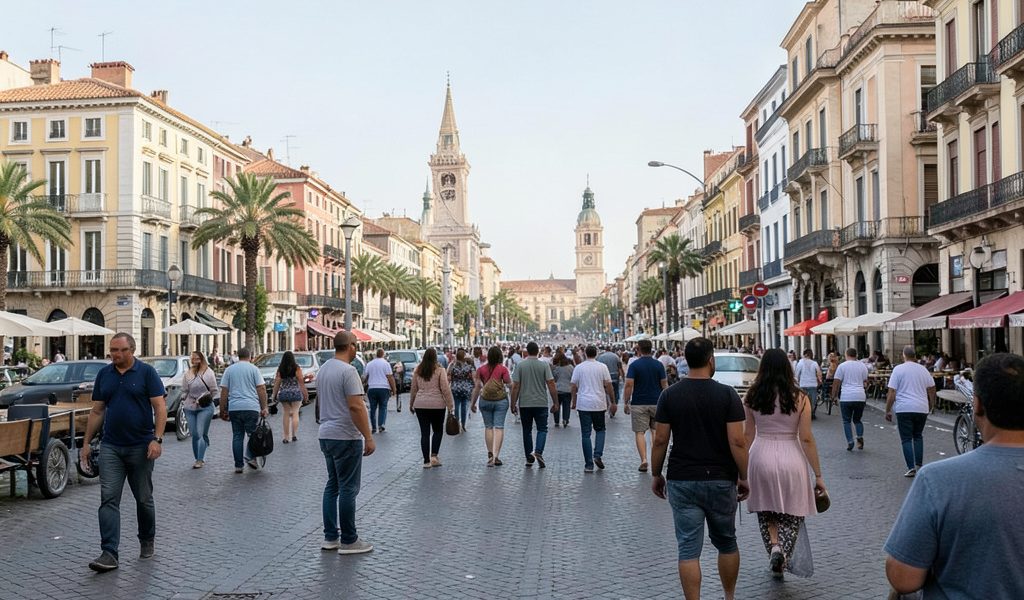
Why a city needs a visitor limit A city is not a hotel with unlimited space. Streets, museums, ports, historic neighbourhoods and cafés are smaller units that can withstand only so much pressure. When visitor flows exceed those limits, service quality falls, maintenance costs rise and residents’ lives are affected. A limit does not prevent growth: it regulates it, making tourism income sustainable rather than allowing a short season to leave a lasting burden. Without limits, tourism success can become a crisis, as simultaneous arrivals generate more demand for transport, water and security than operating budgets can accommodate.
Who actually determines carrying capacity? No single authority owns this decision. In well-managed cities, the municipality works with the tourism authority, environment ministry, transport operator, security services and neighbourhood representatives. The municipality monitors public facilities, the tourism authority estimates demand, the transport operator identifies vehicle capacity and environmental authorities set limits for sensitive sites. Sharing responsibilities turns a theoretical figure into an operational commitment. Sound decisions draw on cross-checked field data, because any one body may overestimate capacity or overlook the effect of visitors on neighbours.
Spatial measures: what can a place actually accommodate? The first measure is usable space, not the total area shown on a map. In a public square, assess where people can walk safely, rather than counting all the land. In a museum, capacity depends on how many visitors can move through without crowding or danger. In a historic passageway, consider how flooring, ventilation and lighting cope with foot traffic. Divide the city into smaller units: an attraction, market, beach, station or neighbourhood, and assess their individual limits rather than applying one average throughout. More visitors at one point do not necessarily create equal pressure elsewhere: capacity varies with the layout, pace of movement and length of stay.
Time measures: visitor numbers alone do not capture pressure Daily totals can mislead. A city may cope with 10,000 visitors spread over 12 hours, while the same number arriving within 2 hours could bring movement to a standstill. Measure capacity over time: visitors per hour, during critical intervals and at peak periods. Length of stay matters too: a visitor staying for 3 hours has a different impact from one staying for 20 minutes. Time turns a headcount into a measure of actual pressure. Advance booking, scheduled group entry and visits spread across different time slots can reduce peaks without reducing the overall number of visitors.
Infrastructure and resources: water, transport and waste A destination does not operate in isolation. Every visitor consumes water, uses transport, produces waste and needs services. Capacity therefore depends on available resources: how many tonnes of waste can the local system process, how many buses or trains are needed, and how much water is available for hotels, gardens and residents? If visitor numbers grow without corresponding increases in capacity, the city pays a hidden price through more frequent maintenance, longer congestion and more complaints. This is a financial issue as well as a technical one. Expanding capacity requires investment, and poorly planned investment can become a burden if demand falls in a later season.
The local community: when does tourism become a burden? Carrying capacity is not merely an engineering figure. There is also a social limit, reflected in residents’ perceptions. Resistance can begin when streets become crowded, rents rise or local services increasingly cater to visitors. Well-managed cities monitor this through regular surveys, neighbourhood complaints, residential turnover and the proportion of homes converted to short-term accommodation. Early warning signs allow limits to be adjusted before opposition becomes widespread. The aim is not to ban visitors, but to distribute them across less sensitive areas and connect tourism revenue to projects that directly benefit residents, so the community shares in its success.
Environment and heritage: limits that should not be crossed Some sites cannot withstand even the number of people their facilities could serve. A beach’s capacity depends on its sand area, wave conditions and seagrass. Archaeological sites have limits related to vibration, humidity and foot traffic. Forest walking trails must be managed to prevent soil erosion. In these settings, capacity is primarily environmental and should be determined through monitoring studies rather than marketing ambitions. At sensitive sites, reducing visitor numbers, introducing seasonal closures or requiring advance bookings may be the wiser approach, because environmental damage cannot quickly be repaired.
The tourism economy: weighing benefits against costs A city manages visitor behaviour as well as visitor numbers. Someone staying for 3 nights, spending in restaurants and shops and using public transport has a different impact from a day visitor concentrating pressure in one location. Assess capacity alongside economic returns: spending per visitor, tax revenue, use of services and maintenance demands. This makes the decision economic and behavioural, rather than simply a number in a report. A city may prefer fewer visitors staying longer, which can provide more stable income, reduce pressure on facilities and allow residents time to recover between seasons.
Digital data: moving from estimates to measurement Carrying capacity need not rely on outdated estimates. Cities can use hotel data, flight bookings, transport cards, site counters, mobile-phone data at gatherings, traffic signals and satellite imagery. These show where crowds move, how long they stay and when they grow. Numbers still need context: is a visitor heading to an attraction, a market or a station? With that understanding, management can move from reacting to anticipating pressure before it becomes a crisis. Privacy protection is essential: data should improve visitor flows, not track individuals.
Step 1: establish the reference units Begin by mapping the units that determine capacity: actual hotel rooms, restaurant and café seats, coach parking areas, public toilets, hourly museum capacity and beach capacity. Cities receive visitors in specific places, not as an abstract mass. Without accurate figures for those units, any overall limit is a fragile estimate. Update the inventory each season: a restaurant closure, a new parking area or a changed bus route can materially alter capacity. Record operating capacity as well as design capacity to avoid relying on figures that cannot be achieved in practice.
Step 2: measure actual use at critical times Once the reference units are known, carry out field measurements. Count visitors at peak times, record how long they stay, measure entries and exits, collect residents’ complaints and analyse transport data. The question is not simply how many people visited, but how they used the city. An acceptable daily total may still overwhelm a single station or street during one hour. This is the difference between managing totals and managing behaviour. Fieldwork also reveals hidden bottlenecks: people stopping for photographs in a narrow passage, groups arriving together or coaches waiting in unsuitable places. These observations make subsequent decisions more realistic.
Step 3: test seasonal scenarios Carrying capacity is not a fixed number. A city during a holiday differs from the same city on a normal working day; summer differs from spring, and school holidays from conference season. Test scenarios: what if 1,000 people visit a site in an hour, a bus breaks down, bad weather arrives or an unplanned festival takes place? Such tests reveal breaking points and prevent an entire season from being managed using one figure. Some sites need flexible limits that rise on certain days and fall on others, rather than one rule for every situation. That flexibility helps maintain the visitor experience without compromising safety.
Step 4: connect the limit to practical policies A number has little effect unless it becomes policy. Cities need tools such as advance booking, peak-time admission charges, organised group visits, restrictions on short-term stays, incentives to stay in alternative neighbourhoods, different routes, extended opening hours and coordination with hotels. Early warnings are also needed: when occupancy or transport activity exceeds a defined threshold, temporary measures should take effect. This makes limits operational rather than merely promotional. Review each tool after every season, because markets and visitor awareness change and a previously useful measure may no longer suit conditions. Management must remain responsive.
Common mistakes in calculating carrying capacity Frequent errors include using total rather than usable space, annual averages rather than peak demand, or ignoring length of stay. Another is treating all visitors alike, although a school-trip visitor, a motorist and a guest at a large hotel have different needs. Basing capacity solely on hotel figures overlooks day visitors and people staying in informal accommodation. Publishing a number without a way to update it is another mistake: it can remain in force for years while the city expands or services decline. Confusing theoretical capacity with safe capacity also creates a gap between planning and reality.
Mistakes in managing visitor flows Problems arise from distribution as well as headcounts. Bottlenecks occur when every group is directed to one attraction, coaches wait without clear routes, or nearby attractions open simultaneously. Poor coordination among hotels, restaurants and transport providers can send everyone to the same port at the same time. Cities therefore need to manage routes as well as numbers. Relying on signs alone, without changing admission times, charges or priorities, is another common error. Effective visitor flows require day-to-day decisions, not just a fixed seasonal policy.
Practical lessons from city management Start with the most sensitive site, not necessarily the most famous. Measure the effect of visitors on residents every 3 months. Link advance bookings to discounts or priority access to encourage gradual changes in behaviour. Spread events across alternative neighbourhoods instead of concentrating them in one centre. Combine hotel and transport data, as neither source gives a complete picture on its own. Review limits after every major event, not just annually. Experience in cities that manage this well suggests that patient implementation matters more than a quick announcement: visitors and residents need time to understand new rules, and this builds trust.
How a city knows it has exceeded its capacity Warning signs include unusually heavy crowding at particular points, repeated resident complaints, slower transport services, rising maintenance costs, poorer visitor ratings, unregulated accommodation and pressure on heritage sites. More visitors coupled with lower average spending can also be a warning, as the income generated may not cover their impact. In that situation, temporarily reduce limits or redistribute flows rather than increasing promotion. Bring these indicators together in a single dashboard instead of leaving them scattered across municipalities, authorities and private companies. Cities falling behind often lack a clear picture of conditions rather than visitors.
Frequently asked questions
What is the difference between carrying capacity and operating capacity?
Carrying capacity is the safe maximum number of visitors, while operating capacity is the number a city can actually serve at a particular time.
Can carrying capacity always be increased?
No. Expansion requires investment in transport, resources and facilities, and can damage the environment or residents’ lives if undertaken without proper assessment.
Is an annual figure sufficient?
No. Pressure emerges at peak hours, during seasons and at events, so hourly and seasonal measurements are needed.
How can hotels use this concept?
By spreading demand, coordinating arrival and departure times, and considering length of stay and service quality when planning accommodation.
Does every city need a formal limit?
Cities that depend on sensitive sites need one, because a limit helps turn tourism growth into sustainable management.